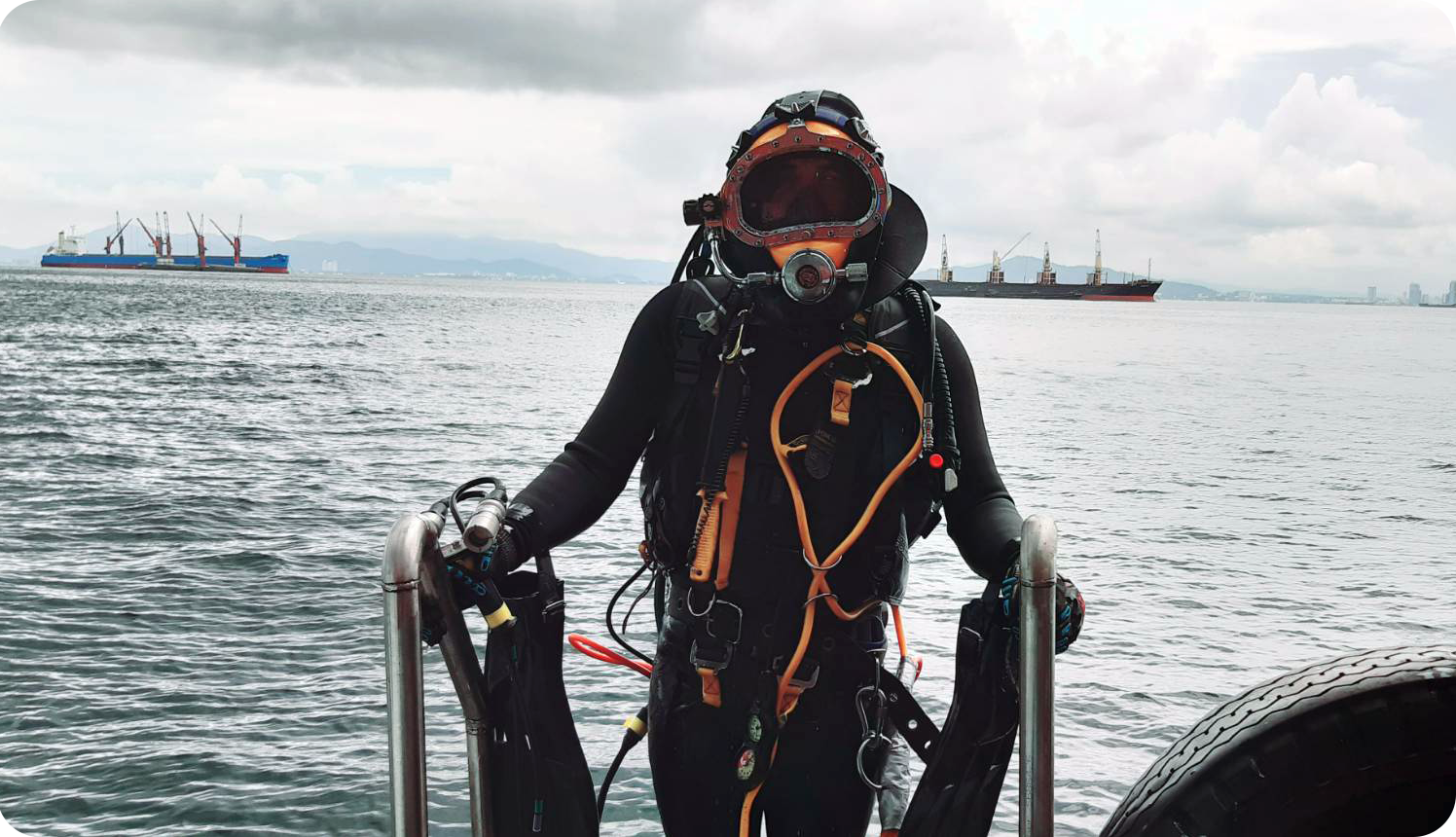
Magnetic Particle Inspection (MPI), or Magnetic Particle Testing (MT), remains one of the most reliable and widely used Non-Destructive Testing (NDT) methods. It has been a cornerstone in a wide range of industries, like aerospace, oil & gas, shipping, rail, and heavy manufacturing for decades.
Non-Destructive Testing refers to evaluating properties to a component without causing permanent damage. MPI is an important type of NDT, combining simplicity and high sensitivity to reveal surface and near-surface cracks, laps, seams, and other discontinuities. Such defects may be nearly impossible to spot by the naked eye alone and could lead to catastrophic failure if left undetected.
There are various different types of NDT methods available, but this blog will specifically focus on the MPI technique, particularly related to the usage in an underwater environment where other methods are generally not feasible.
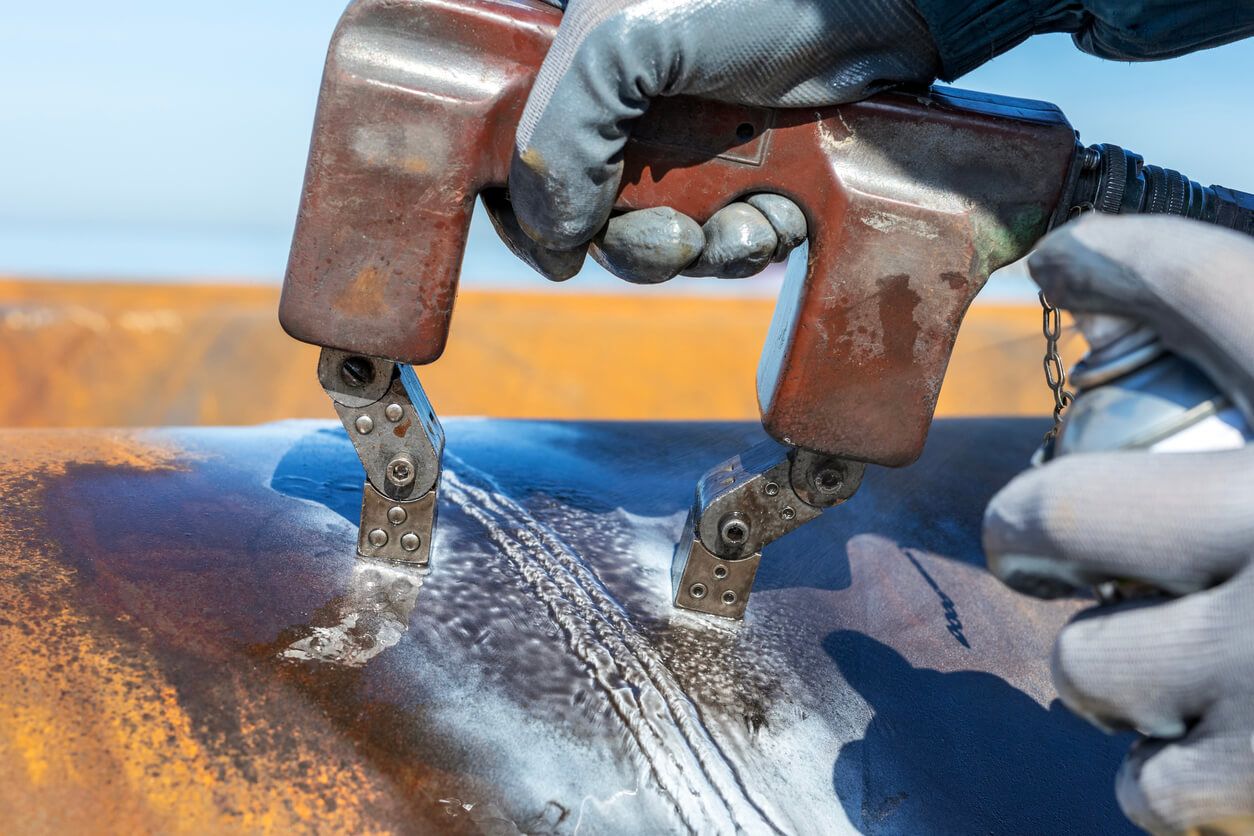
Topside MPI
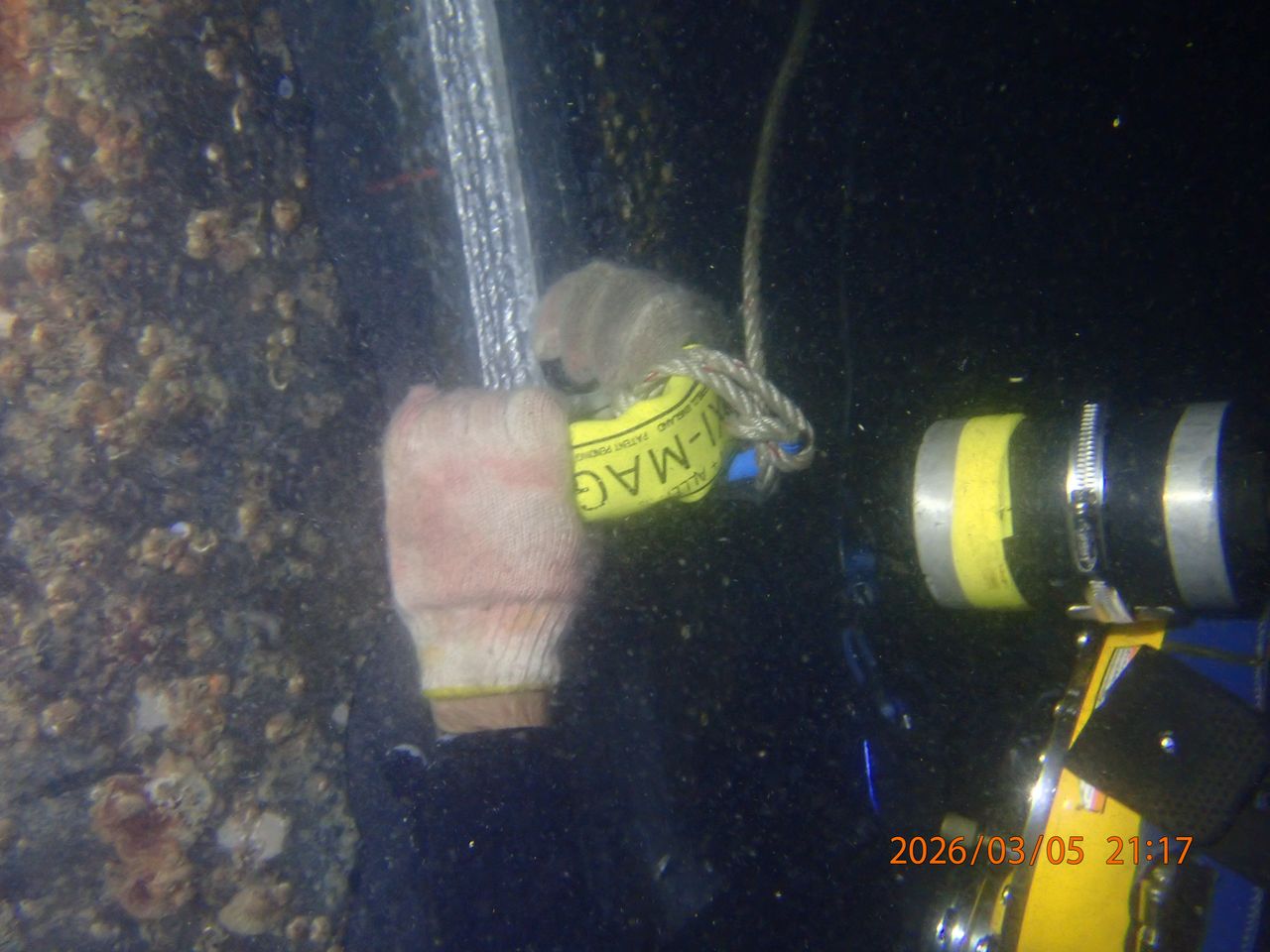
Underwater MPI
How MPI Works: The Basic Principles
Imagine running an invisible magnetic field lines through a metal bar – like water through a hose. If the bar is solid, the lines flow smoothly. But if there’s a crack, some lines are forced to detour around the gap → creating a “leakage field” above the surface. This leakage field is the location of the crack.
– MPI works because ferromagnetic materials (primarily iron, steel, nickel, and cobalt alloys) can be magnetized.
– When a magnetic field is introduced into a sound component, magnetic flux flows through the component freely and unrestricted, any defects that disrupt this flux creates a leakage field at the surface.
– Fine magnetic particles are applied to the surface of the test area and collect at the leakage fields, revealing the defect as a visible indication. This leakage field principle makes even hairline cracks dramatically visible under proper lighting conditions.
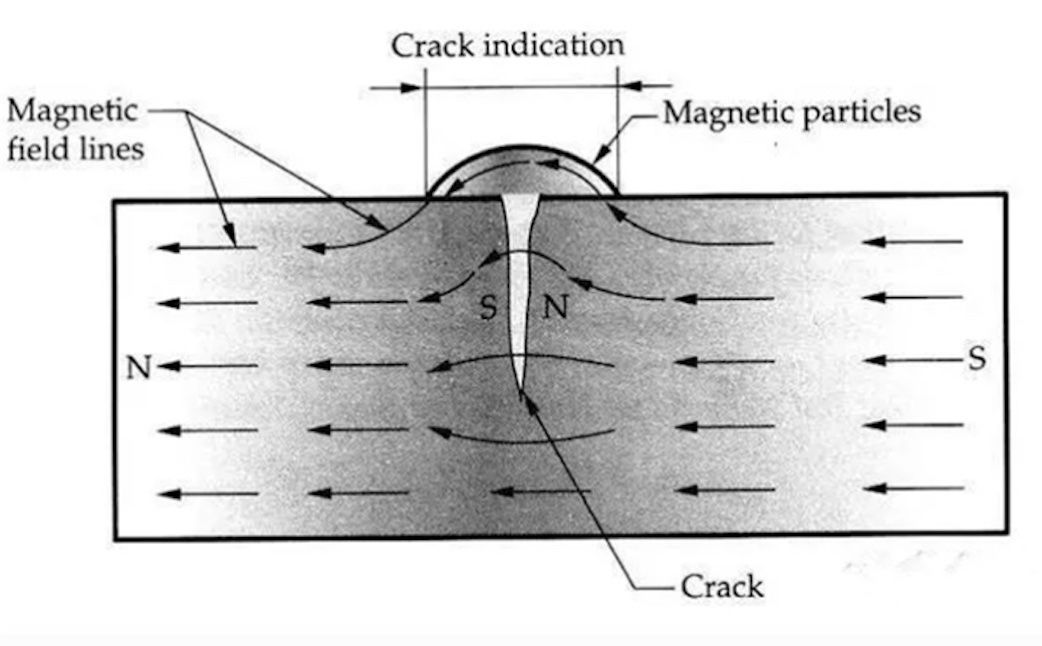
Principle of MPI
Equipment and Consumables
Power Supplies: AC, or DC yokes, coils, prods, or permanent magnetic can be used, depending on the component profile and required flux patterns.
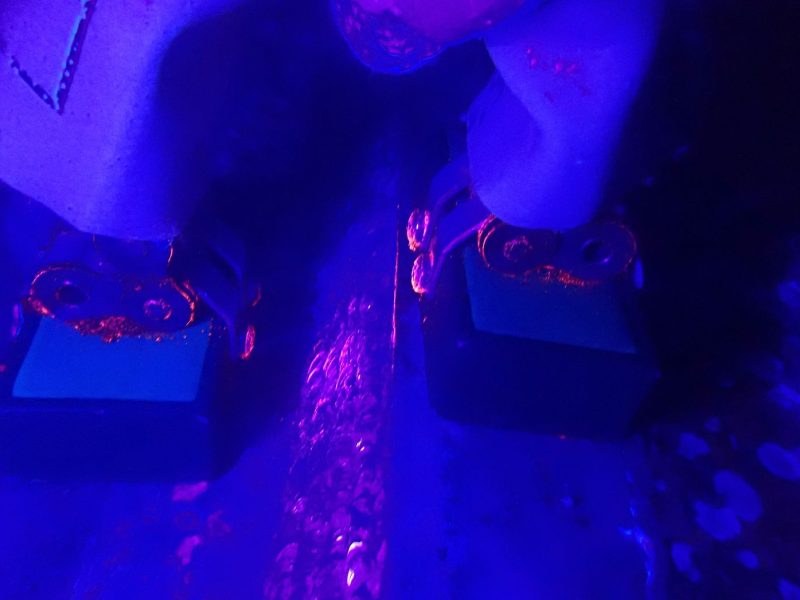
Detection Media: When considering an underwater environment, suspended fluorescent magnetic particles are used, which become visible under a UV light. In a dry environment, powders or magnetic paint can be utilized.
Flux Indicators: Are tools used to ensure an adequate magnetic field is being produced at the test location using the above equipment. Minimum field strength is generally 1 Tesla.
It is quite important to ensure all equipment has been calibrated and working correctly prior to validate any NDT test results. It is also imperative proper preparation has been carried out at the worksite, including, removing and paint coatings and debris that may obstruct or give spurious indications while testing.
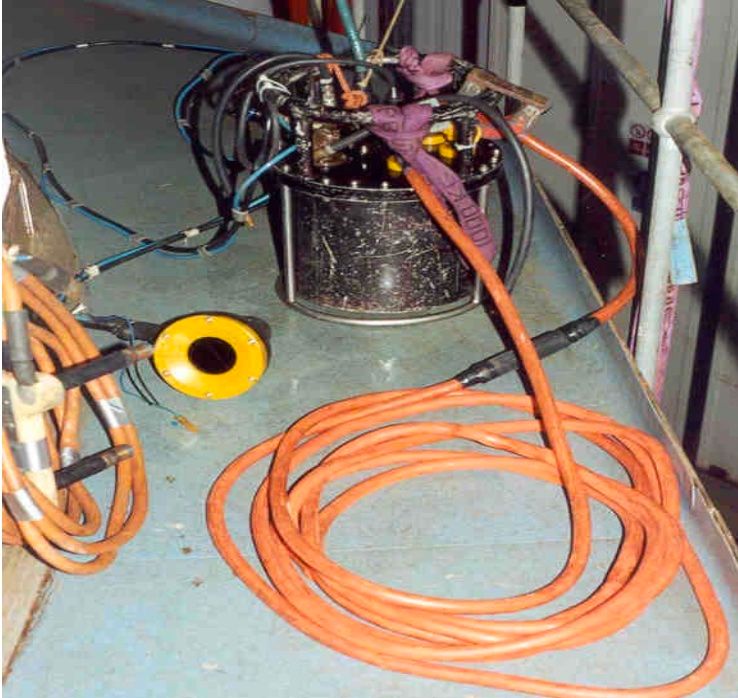
Prods and Encircling Coils used for underwater MPI
Advantages and Applications
When performed by trained and certified inspectors, it is excellent and an extremely sensitive technique for finding tight surface-breaking and near-surface flaws in welds and heat-affected zones.
Its advantages include:
- Rapid testing, with immediate results
- Possible to inspect castings and forgings and great for detecting fatigue cracks caused by excess vibrations and repetitive stress loadings (rudder pintles, bilge keels, riser clamps, boat landings, etc.)
- Portable and relatively lightweight systems are available for use in the field
- High sensitivity – especially with fluorescent particles under UV lights
- Better for use when remedial operations are required, such as grinding
- A proven technique that is widely accepted in a wide array of industries
Limitations and Considerations
As with everything all NDT methods, the MPI technique does comes with its share of limitations:
- Limited to ferromagnetic materials (no aluminum, copper, stainless, etc.)
- Not effective in finding deep internal defects
- Risk of irrelevant or spurious indications from complex geometries, residual magnetization, or improper cleaning
- Ambient lighting conditions need to be sufficient to in order to view the inspection media. Dark environments, or nighttime operations are preferred
- Requires a relatively high level of surface cleaning and preparation
- Less effective when performed in areas with strong tidal currents due to loss of detection media
- No permanent record of findings achieved. Inspectors will have to utilize further recording techniques, such as video or still photography or other types of NDT techniques to accurately size the defects
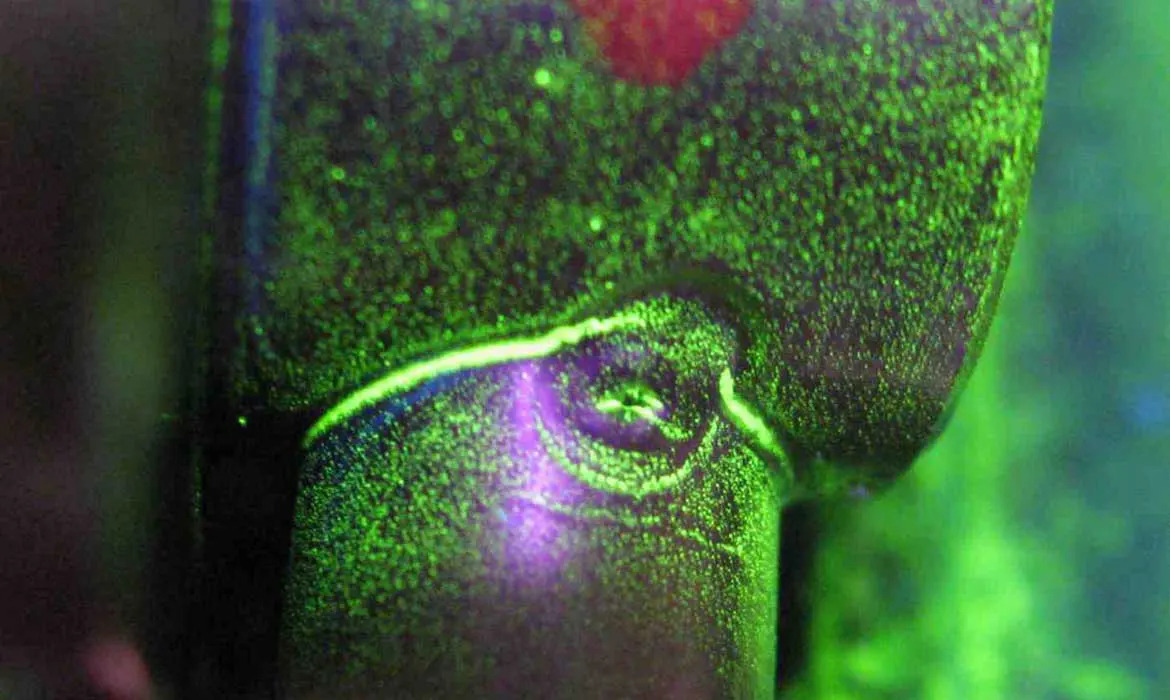
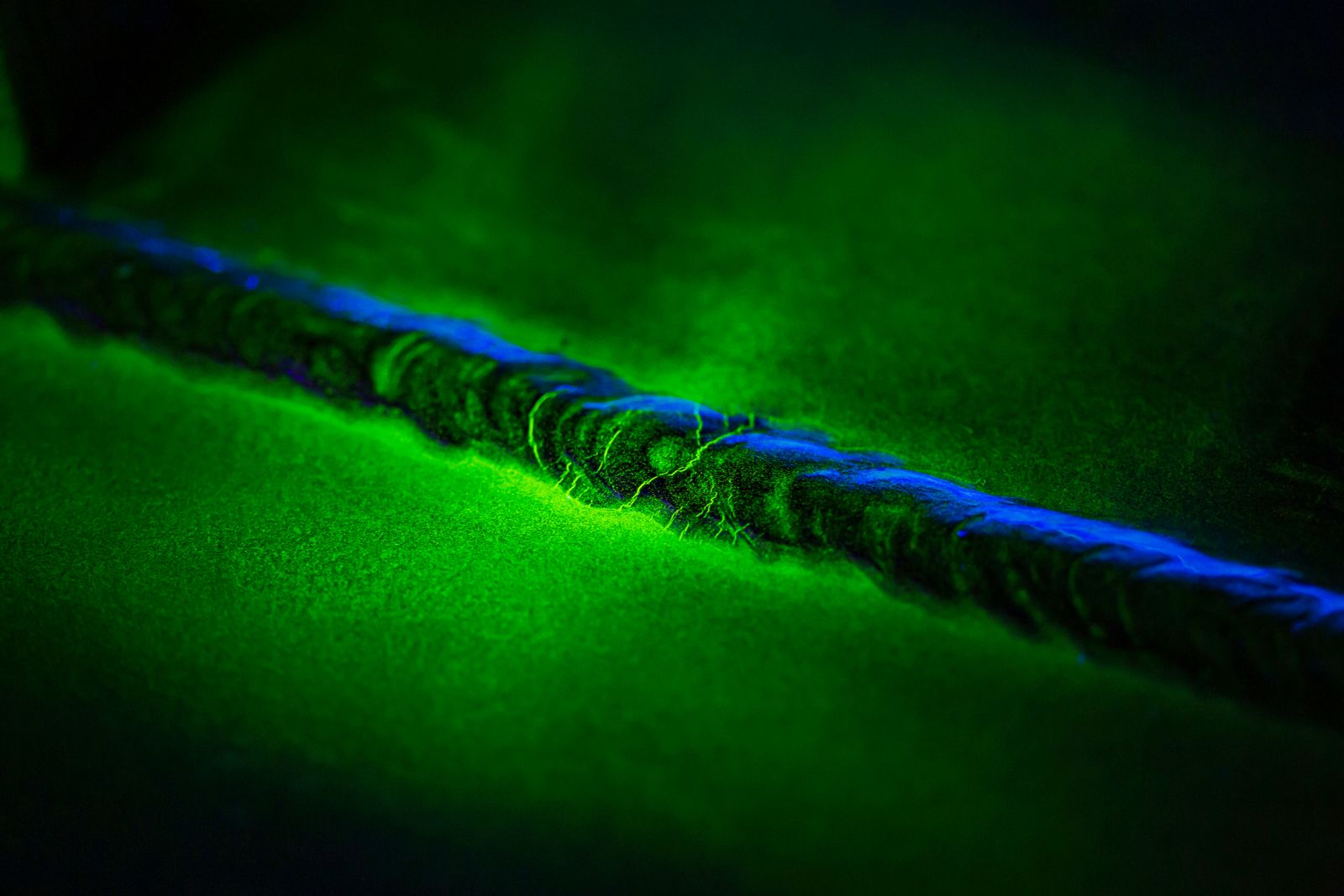
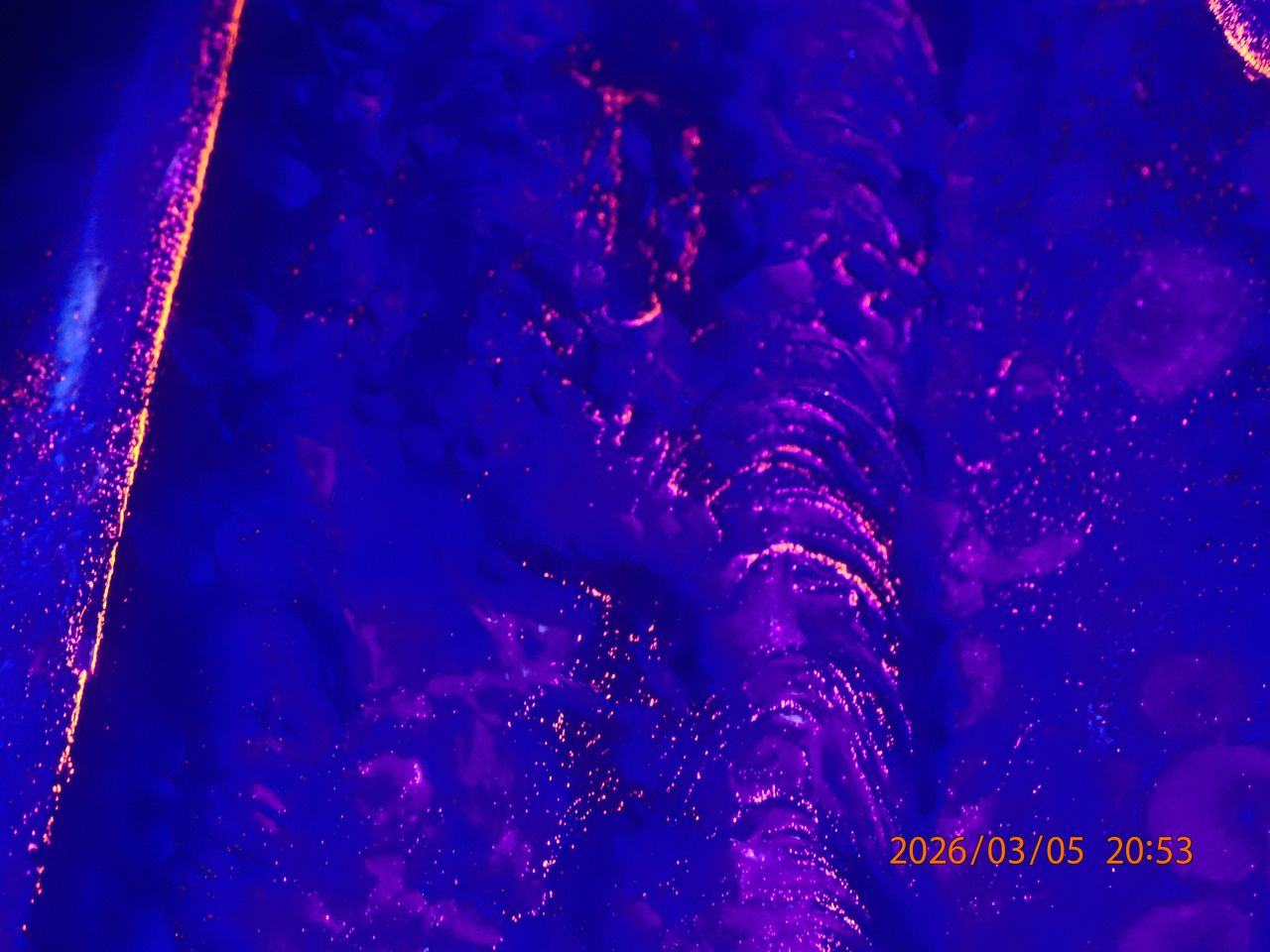
MPI results
Final Thoughts: MPI Remains as a Workhorse
As advances in technology prowess continues to grow in the NDT sector (think phased-array ultrasonics, ACFM and digital radiography) Magnetic Particle Inspection is still one of the most requested and performed NDT methods worldwide. Why? Because it’s cost-effective, simple, reliable, sensitive and fast, and – when done correctly – incredibly effective at preventing failures before they happen.
Need assistance with a procedure qualification, MPI operations or interpretation of complex indications? Reach out to us!
Thai Subsea Services Ltd. retains internationally certified personnel capable to carry out a wide range of NDT methods, including underwater Magnetic Particle Inspections.
 Vessel Condemnation: Ensuring Safety and Compliance with Professional Commercial Diving